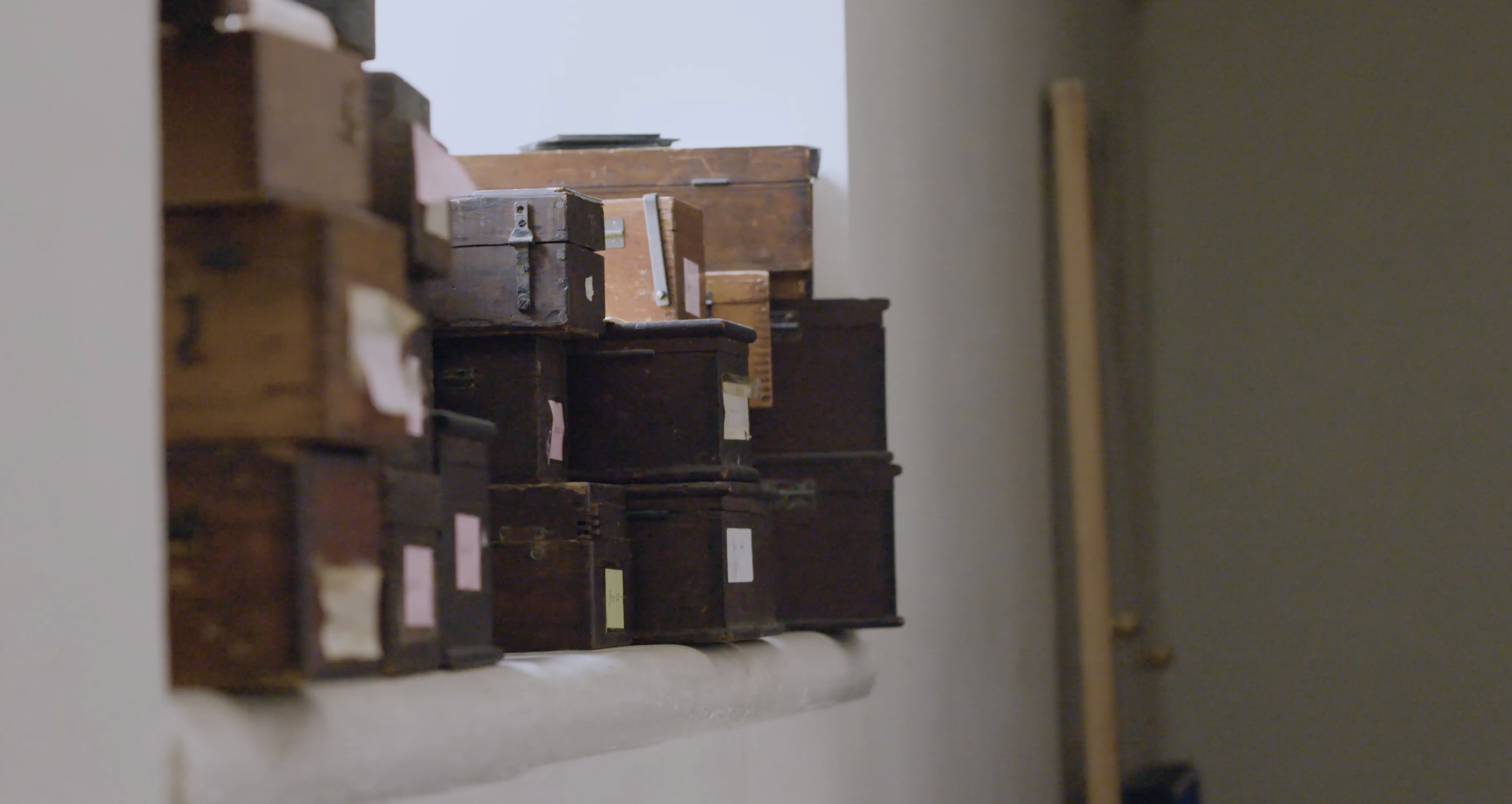
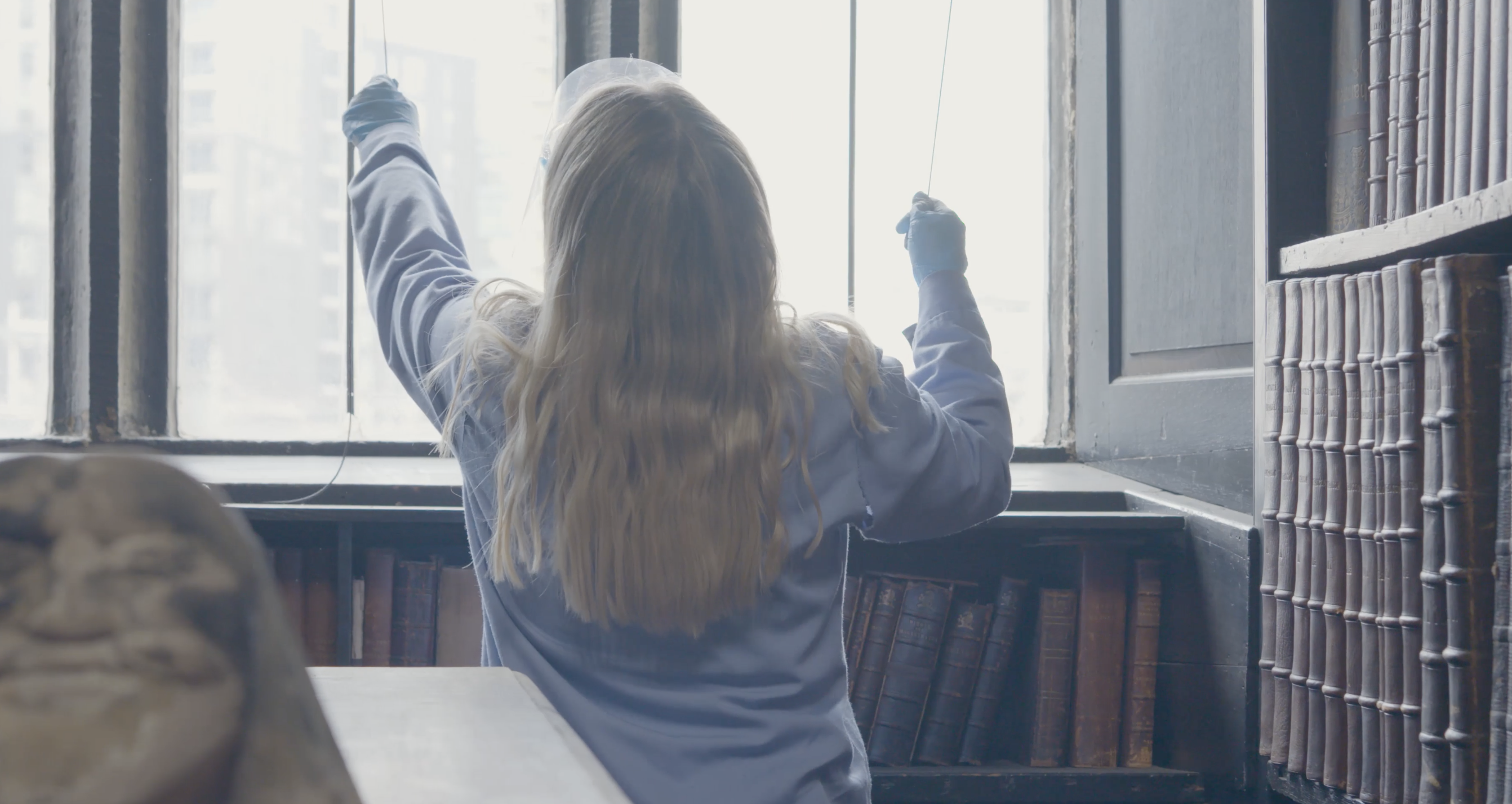
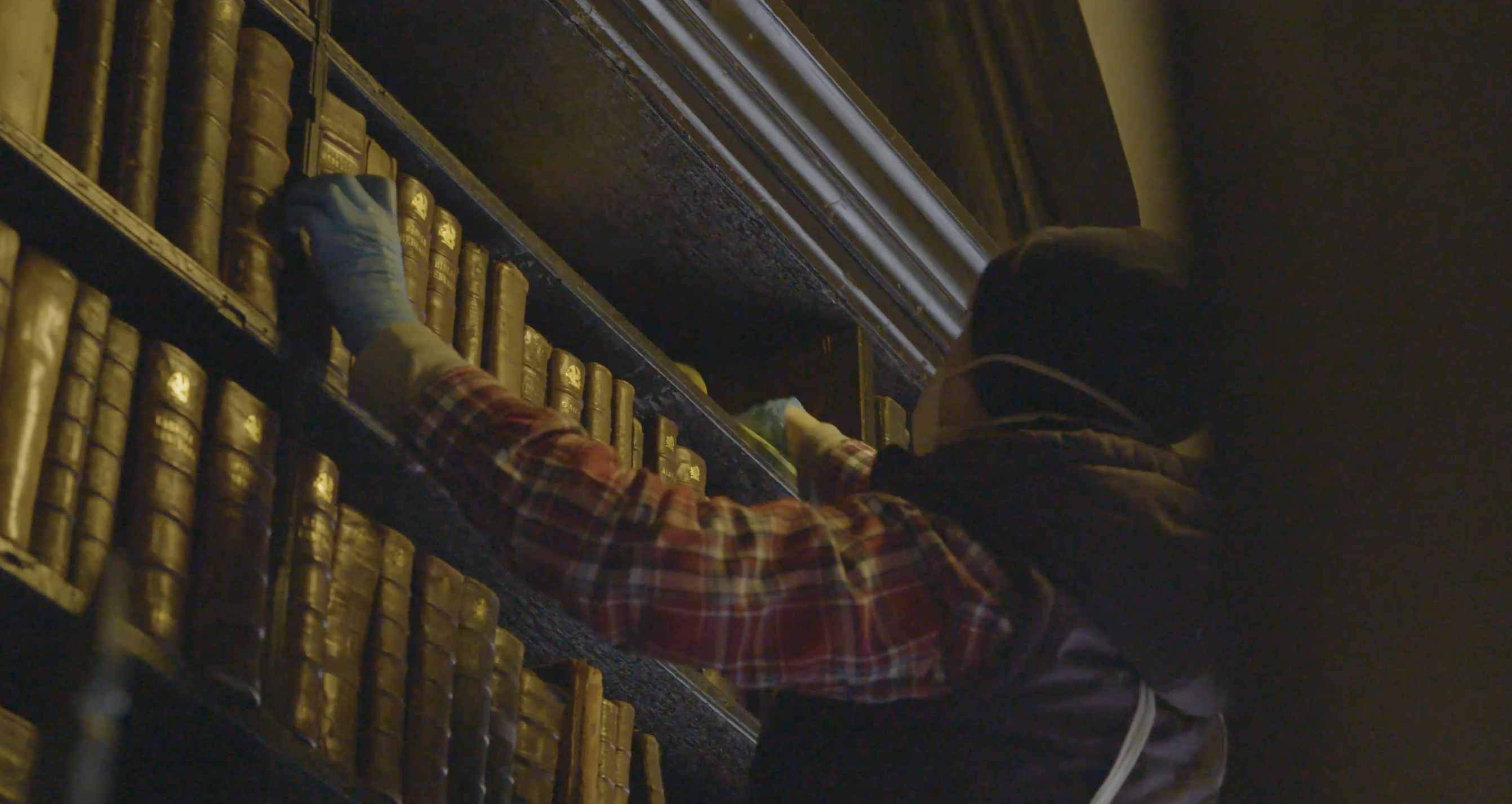
The building that houses Chetham’s Library was constructed as a college for priests in 1421 and adapted into a library in 1653. It has been free to use as a public reference resource ever since. The library's first acquisition was an eight-volume edition of St Augustine's work, which features the first known literary account of someone reading silently. From its ground-floor cloisters to the digitisation equipment in an upstairs store room, the architecture, furniture and holdings of Chetham's Library record their own complete story of modern literacy development.
For years I have been thinking about the relationship between art and libraries – about how art might help us to see the life of particular libraries in new ways, and how art might help us to imagine different future forms of public library – and often dreamt about Chetham’s, the oldest public library in the English-speaking world. One day in April 2021, as the librarians prepared to re-open the place from the Covid-enforced lockdown, I stopped thinking and just watched with a camera, partnered by film-maker Dominic Joyce. I was looking for a story about the history of reading, the organisational logic of the library and the layered forms of attention that libraries are designed to enable. Instead, we saw the extraordinary practices of care being exercised by those people who quietly preserve public access to the place, its things, its histories and its opportunities.
The film we eventually created from all that footage is short and noiseless. Hidden in the subtitles is a prose-poem written in four pairs of sentences. Each pair of sentences takes the same opening phrase in a different direction of thought.
A web-resolution version of the Tender Silences is free-to-stream online, thanks to Chetham's Library and the UNESCO-backed Festival of Libraries. In this version, the prose-poem is embedded in the Closed Captions, which you can turn On/Off.
Via the Related Entries section, you can watch a short talk about the beginnings of the project ('Silenced Libraries', 2021) or a longer discussion about the library, film and a related publication ('Seeing Libraries Differently', 2022).