This exhibition was curated to be a physical and mental gathering of sounds, words and objects that tackle the dematerialization of art pieces into aural forms. Ranging from live events, pre-recorded contributions and curated sessions, the project explored the existing relationship between the physicality of an object and the possibility of its oral transmission. Through a weekly update of online audio streaming, the FormContent team mapped and experimented with the parameters of an exhibition as a recorded medium.
At the same time, the gallery space was open to be used by the participants as a listening room, a compendium for the online contributions, or as an impromptu collection of objects that investigated the relationship between the presence of a work and its narration. Guests working on the threshold of art, music and writing were invited to develop content that fed the online streaming and could also create a visual layer to the exhibition space through events, performances or temporary sets.
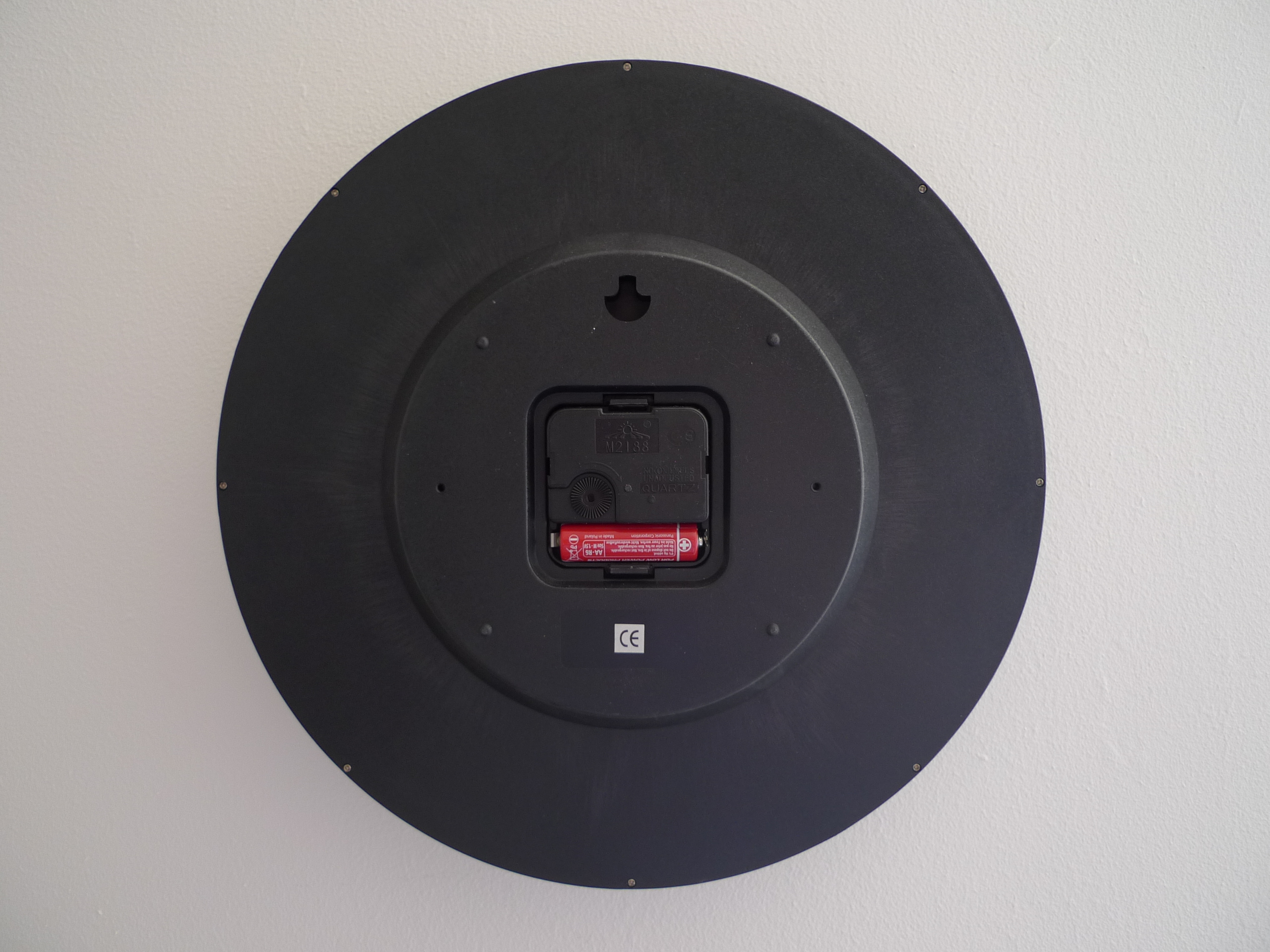
My work for the show was two-fold: First, a digital audio file entitled 08717 893 642 (Edit 2), which loops together field recordings of the so-called 'talking clock' telephone line and was broadcast on the Gallery's web stream. Second, the pictured exibit, Untitled (tangent from the 08717 893 642 series), which was presented as a kinetic sculpture that reduces the clock to a metronome for 'now' moments.
This work is a precedent for what became my performance poem, Esperanto Rhythm. Its presentation here was contextualised with two short epigraphs rather than any descriptive information:
“On the first evening of fighting [in the July Revolution], it so happened that the dials on clock towers were being fired at simultaneously and independently from several locations in Paris. An eye witness, who may have owed his observation to the rhyme, wrote as follows: 'Who would believe it! It is said that, incensed at the hour, / Latter-day Joshuas, at the foot of every clocktower, / Were firing on clockfaces to make the day stand still.'"
—Walter Benjamin,
“The days are the same but different.”
—On Kawara